
How to choose tote-based mini AS/RS pre-sales : selection, rollout and support checklist
When upgrading from traditional shelving or manual storage to a tote-based mini AS/RS, the most common cause of project delay or redesign is incomplete pre-sales data. For implementation managers and maintenance leads evaluating an automated storage retrofit, the immediate answer is clear: you must prepare four specific categories of verifiable data before requesting a formal proposal. These are site physical constraints, standardized tote and cargo parameters, inbound/outbound cycle requirements, and existing system interface boundaries. Without these verified inputs, solution providers cannot accurately determine equipment configuration, storage capacity, or automation level. Guangermei’s project delivery experience confirms that feasibility for compact automated warehouses depends entirely on matching real business needs with physical and operational realities. Below is a practical diagnostic checklist tailored for replacement and upgrade scenarios in manufacturing, e-commerce, and pharmaceutical warehousing.
1. Site Physical Constraints and Safety Conditions
Automated storage systems have precise spatial requirements that differ significantly from manual racking. Before any design work begins, collect the following site-specific data:
- *Clear Floor Space:
- Measure the exact length, width, and usable height of the designated area. Note that standard mini AS/RS equipment references approximately 12300mm × 2070mm × 3150mm, but custom configurations require precise clearance for installation and maintenance aisles.
- *Floor Load Capacity:
- Verify the floor’s load-bearing rating per square meter. High-density racking concentrates weight differently than dispersed shelving.
- *Obstructions and Utilities:
- Map all columns, overhead pipes, HVAC ducts, electrical conduits, and fire suppression systems within the planned footprint. Even minor obstructions can affect stacker crane travel or conveyor routing.
- *Access Points:
- Document door widths, ceiling heights at entry points, and elevator dimensions if equipment must be moved to upper floors. Installation logistics often dictate module sizing.
- *Environmental Conditions:
- Record temperature ranges, humidity levels, and dust exposure. Pharmaceutical and electronics storage may require climate-controlled zones that affect material selection and component ratings.
Risk Boundary: Do not rely on architectural drawings alone. Always conduct an on-site verification survey. As-built conditions frequently deviate from original plans, especially in older facilities undergoing upgrades.
2. Standardized Tote and Cargo Parameters
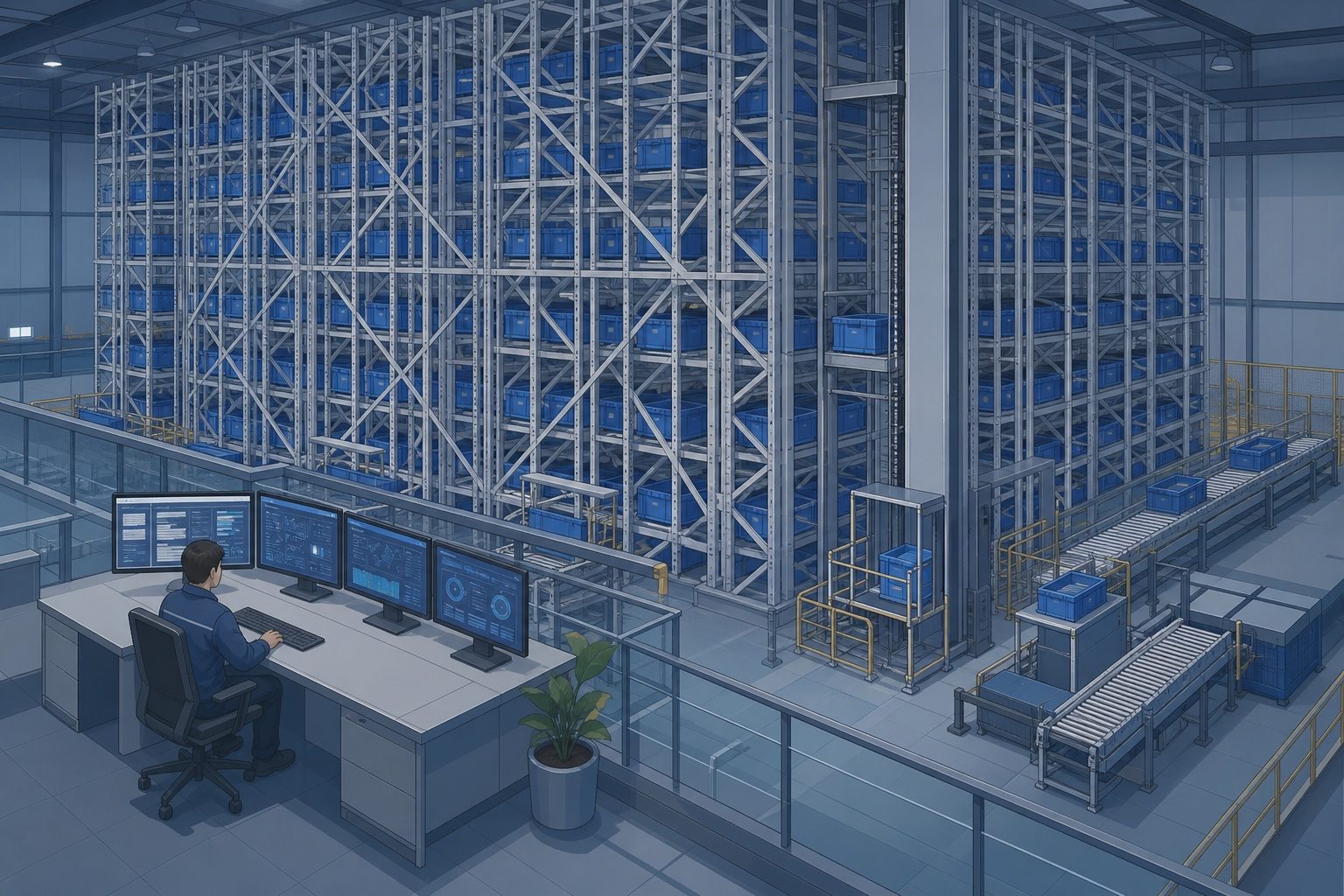
Tote-based mini AS/RS systems are designed around standardized containers. Inconsistent or undefined tote specs are the primary technical blocker for accurate storage location calculation and handling reliability.
- *Tote Dimensions:
- Confirm external length, width, and height. Guangermei’s standard reference totes are 550mm × 365mm × 210mm or 330mm. Custom sizes are possible but directly impact storage density and equipment compatibility.
- *Maximum Single-Tote Weight:
- Verify the gross weight limit. The standard reference for tote and turnover container single-box load capacity is ≤50 kg. Exceeding this requires structural reinforcement and different handling mechanisms.
- *Cargo Characteristics:
- Document item types, packaging stability, fragility, and whether goods protrude above tote rims. Unstable loads may require dividers or specialized inserts.
- *Storage Location Estimate:
- Based on tote height, calculate approximate capacity. For example, 210mm-high totes yield approximately 320 storage locations per standard module, while 330mm-high totes yield approximately 240. Use this as a baseline for space planning.
- *Container Compatibility:
- If reusing existing totes, provide samples or detailed CAD models. Minor dimensional variances can cause jamming or sensor failures in automated systems.
Practical Check: Test sample totes through a mock handling cycle before finalizing procurement. Real-world friction, warping, or label placement issues often only appear during physical validation.
3. Inbound/Outbound Cycle and Throughput Requirements
Automation level should be determined by actual operational tempo, not theoretical peak capacity. Over-specifying leads to unnecessary cost; under-specifying causes bottlenecks.
- *Average and Peak Cycles/Hour:
- Record typical and maximum inbound/outbound transactions per hour across shifts. Distinguish between full-tote movements and piece-picking operations.
- *SKU Profile:
- List total active SKUs, average lines per order, and seasonality patterns. Multi-SKU, high-frequency access scenarios benefit most from goods-to-person picking configurations.
- *Workstation Integration Needs:
- Define how the AS/RS connects to packing stations, assembly lines, or shipping areas. Include required buffer zones, scanning checkpoints, and exception handling workflows.
- *Batch and Expiry Management:
- For pharmaceutical or food-grade applications, document traceability requirements, FIFO/LIFO rules, and quarantine protocols. These directly influence WMS logic and retrieval algorithms.
- *Future Growth Buffer:
- Specify expected volume increases over the next 3–5 years. Modular designs allow phased expansion, but base infrastructure must accommodate future scaling.
Decision Boundary: Prioritize stability and maintainability over maximum speed. A system running reliably at 85% of rated capacity delivers more long-term value than one operating at 98% with frequent downtime.
4. System Interface and Operational Boundaries
Upgrading to automation rarely happens in isolation. Clarify integration points early to avoid costly mid-project scope changes.
- *Existing Software Ecosystem:
- List current ERP, WMS, MES, or WCS platforms with version numbers. Define which system owns inventory master data, task generation, and execution feedback.
- *Interface Protocol Preferences:
- Specify preferred communication methods (e.g., REST API, OPC UA, database views) and security requirements.
- *User Role Definitions:
- Identify who will operate, monitor, and troubleshoot the system. Training content and HMI design depend on operator skill levels.
- *Maintenance Access Plan:
- Ensure adequate clearance for routine servicing. Vertical conveying units, rollers, belts, and lift mechanisms require scheduled inspection points.
- *Exception Handling Protocols:
- Document procedures for barcode misreads, tote jams, network outages, and power failures. Resilience planning is part of pre-sales validation, not post-installation troubleshooting.
Verification Step: Request an interface confirmation checklist from your solution provider before signing contracts. Ambiguity in responsibility boundaries between ERP/WMS/WCS/MES is a leading cause of integration delays.
Next Steps for Implementation Teams
Gathering this data does not require perfect precision upfront, but it does require disciplined documentation. Start with internal audits using the four categories above. Engage cross-functional stakeholders—operations, IT, facilities, and safety—to validate assumptions. Once preliminary data is compiled, share it with qualified automated storage providers for feasibility review. Guangermei supports clients through this pre-sales validation phase with structured consultation focused on practicality, stability, and long-term maintainability. Our tote-based mini AS/RS solutions are configured based on verified site conditions, cargo dimensions, single tote weight, storage location counts, and real cycle times—not generic templates. If you are preparing for an automated warehouse upgrade and need guidance on data collection or feasibility assessment, contact our team to discuss your specific scenario.
Recommended
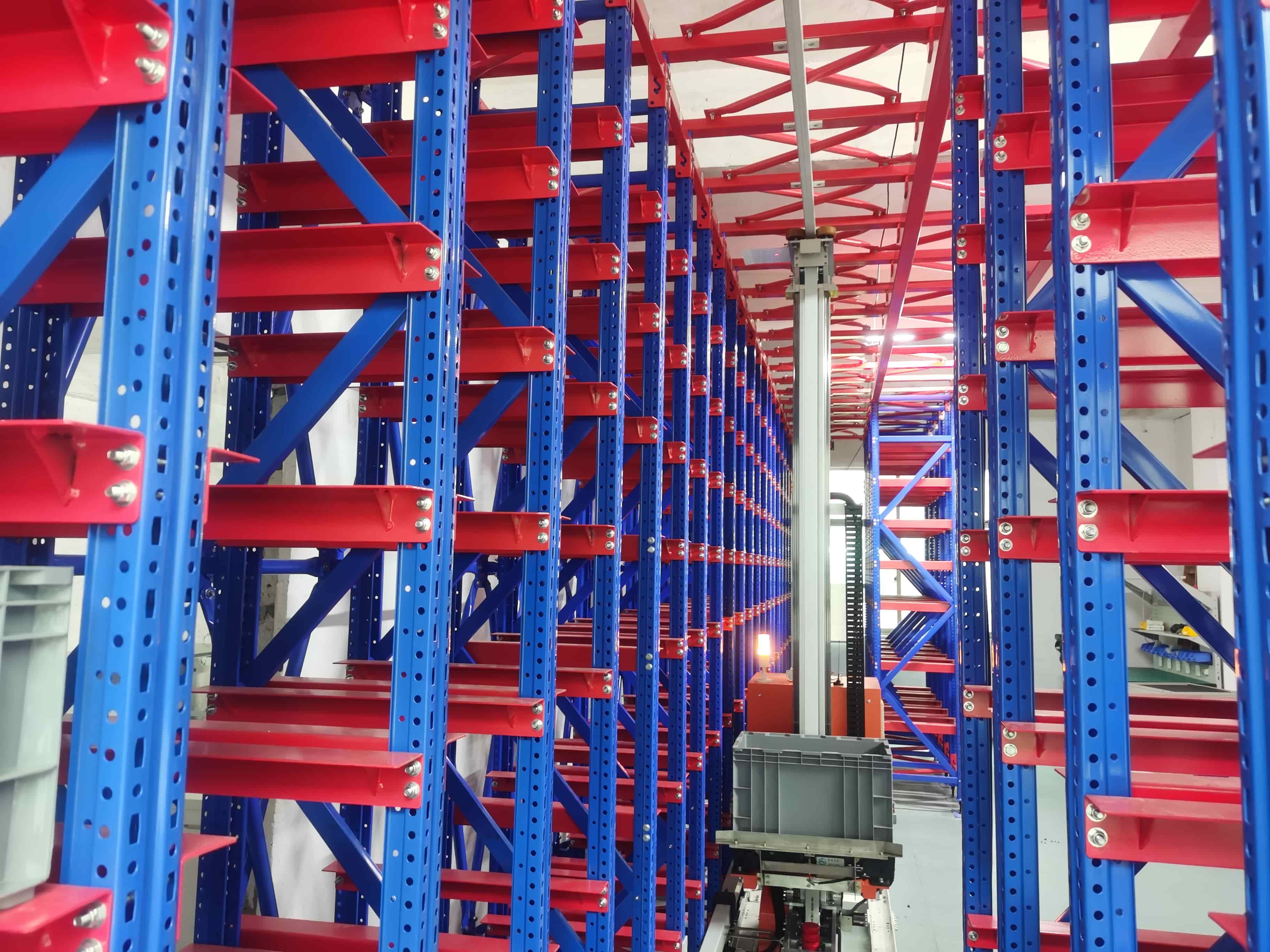
Miniload Stacker Crane AS/RS Solution
Using totes as the core storage and retrieval unit, combined with high-speed stacker cra...