
Pre-Sales Data Checklist for Tote-Based Mini AS/RS Projects
When upgrading from traditional shelving to a tote-based mini AS/RS, the most common cause of project delay is incomplete pre-sales data. Unlike standard equipment purchases, automated storage systems are highly dependent on specific site constraints and operational workflows. Without verified baseline data, solution providers cannot accurately calculate storage density, select appropriate stacker crane models, or confirm whether your existing totes are compatible with automated handling.
For manufacturing enterprises, e-commerce logistics centers, and pharmaceutical warehouses evaluating Guangermei’s tote-based mini AS/RS, preparing the following four categories of information before the initial consultation will significantly accelerate the feasibility assessment and solution design phases.
1. Site Conditions and Spatial Constraints
Automated storage systems utilize vertical space differently than manual warehouses. Before any layout can be proposed, precise physical boundary data is required to determine if standard equipment fits or if customization is necessary.
- Clear Ceiling Height:*
- Measure the unobstructed height from the finished floor to the lowest overhead obstruction (lights, sprinklers, HVAC). Note that while standard mini AS/RS equipment may have a reference height of approximately 3150mm, high-bay configurations require additional clearance for maintenance and fire safety compliance.
- Floor Load Capacity:*
- Provide the floor loading specification (kg/m²) for the intended installation area. Stacker cranes and loaded racking impose concentrated point loads that differ significantly from uniform pallet racking loads.
- Column Grid and Obstructions:*
- Submit a CAD drawing or dimensioned sketch showing column spacing, door locations, and any fixed obstructions within the planned footprint. This determines aisle width and racking module alignment.
- Utility Access Points:*
- Identify available power supply specifications and network connection points near the proposed equipment location.
Note: For facilities in Huizhou or surrounding regions, Guangermei can conduct on-site surveys to verify these measurements. For distant projects, providing preliminary architectural drawings allows for an initial desktop feasibility check before committing to travel.
2. Tote Specifications and Cargo Characteristics
The tote is the fundamental unit load in a mini AS/RS. System compatibility depends entirely on accurate container data. Using incompatible totes is a primary failure point in retrofit projects.

- External Dimensions:*
- Provide exact length, width, and height measurements. Guangermei’s standard reference totes are 550mm × 365mm × 210mm or 330mm. Significant deviations from these dimensions may require custom gripper mechanisms or non-standard racking pitches.
- Weight Parameters:*
- Confirm both tare weight and maximum gross weight per tote. The single tote load capacity reference for this system type is typically ≤50 kg. Exceeding this limit requires structural reinforcement and different drive specifications.
- Bottom Structure Integrity:*
- Automated systems require rigid, flat-bottomed containers. Assess whether existing totes have reinforced bottoms capable of supporting full load without deformation when lifted by side rails or bottom supports. Flexible or damaged totes cause jamming and sensor errors.
- Barcode/RFID Placement:*
- Document current labeling standards. If integrating with WCS/WMS, consistent label positioning is required for automated scanning at inbound/outbound stations.
Critical Check: Before finalizing any design, submit sample totes for physical testing. Visual inspection alone cannot confirm dynamic handling stability under acceleration and deceleration forces.
3. Throughput and Operational Workflow Data
Storage capacity is only one metric; cycle time determines whether the system meets production or fulfillment demands. Vague descriptions like "high frequency" are insufficient for equipment selection.
- Peak vs. Average Throughput:*
- Specify required inbound and outbound cycles per hour during peak periods, not just daily averages. Equipment sizing must accommodate surge demand without creating bottlenecks.
- SKU Profile and Access Pattern:*
- Provide data on total active SKUs, average lines per order, and ABC classification. High-SKU environments with piece-picking requirements need different workstation designs than bulk storage scenarios.
- Operating Schedule:*
- Define shifts per day and operating hours. Continuous operation may require redundant systems or scheduled maintenance windows that affect effective capacity.
- Special Handling Requirements:*
- Identify any needs for batch management, expiration date tracking, kitting, or sequencing. Pharmaceutical and food-grade applications often require validated traceability protocols that influence software architecture and hardware material selection.
4. System Integration and Interface Boundaries
Automated storage does not operate in isolation. Clarifying IT responsibilities early prevents costly change orders during commissioning.
- Host System Identification:*
- Specify which ERP, WMS, or MES will serve as the master data source. Define whether the AS/RS will receive orders directly or through an intermediary WCS layer.
- Data Exchange Protocol:*
- Confirm preferred interface method (API, database table, flat file) and update frequency expectations.
- Exception Handling Logic:*
- Document business rules for scenarios such as barcode read failures, overweight detection, or destination bin full conditions. These rules must be programmed into the control system before UAT.
- User Role Definitions:*
- Identify who will manage inventory master data, who will handle exception resolution, and who will perform routine maintenance. Training scope depends on these role definitions.
When Data Is Incomplete: Practical Next Steps
It is common for organizations to lack complete datasets during early evaluation. Rather than delaying the inquiry entirely, follow this prioritized approach:
- Submit Available Data First: Even partial information (e.g., site dimensions without throughput data) enables a preliminary feasibility conversation.
- Flag Uncertain Parameters Explicitly: Clearly mark estimates versus measured values. Solution designers can then build appropriate contingency margins or recommend validation steps.
- Request a Site Assessment: For complex retrofits where documentation is outdated or missing, schedule an on-site survey. Guangermei’s team can measure spatial constraints, evaluate existing tote inventory, and observe current workflows to fill data gaps.
- Define Decision Milestones: Agree on what minimum data set is required to move from conceptual proposal to binding quotation. This prevents scope creep and keeps the evaluation timeline predictable.
Preparing structured pre-sales data does not guarantee project approval, but it ensures that any proposal received is based on verifiable conditions rather than assumptions. This reduces risk for both the buyer and the integrator and establishes a foundation for successful implementation.
For technical evaluators ready to begin the assessment process, gathering the above information before initial contact will enable more productive discussions and faster turnaround on preliminary designs.
Recommended
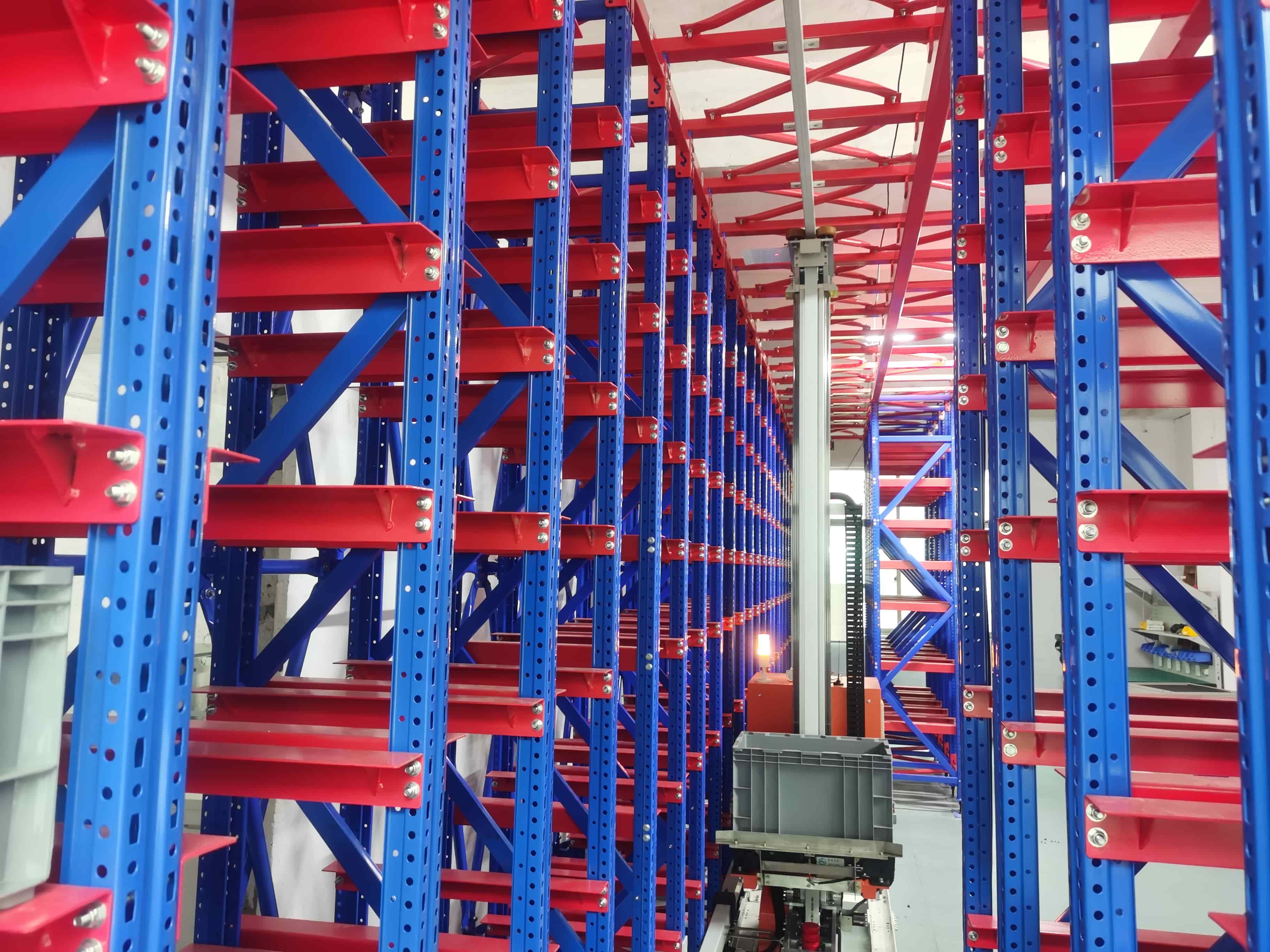
Miniload Stacker Crane AS/RS Solution
Using totes as the core storage and retrieval unit, combined with high-speed stacker cra...