
Automated Storage Project Delivery Process: A Practical Guide for Implementation Teams
Why Most Automated Storage Projects Stall After Contract Signing
Many warehouse automation projects encounter delays not because of equipment quality, but because the delivery process lacks clearly defined handoff points between the vendor and the client. For implementation managers and operations leaders, understanding the full delivery workflow of a tote-based mini ASRS (Automated Storage and Retrieval System) is essential to setting realistic timelines, allocating internal resources, and avoiding integration bottlenecks.
This guide outlines the standard delivery process used by Guang Er Mei for tote-based automated storage projects, based on documented project workflows and field deployment practices. It is intended for enterprise procurement leads, digital transformation teams, and facility managers evaluating or preparing for an automated storage deployment.
Who This Process Applies To
The delivery workflow described here is designed for organizations that:
- Operate SKU-intensive environments such as e-commerce fulfillment, electronics component storage, or pharmaceutical distribution
- Are transitioning from manual flat-floor warehousing to a structured, high-density tote-based storage system
- Require integration between warehouse hardware (shuttles, conveyors, workstations) and existing software systems (ERP, WMS, WCS, or MES)
- Need traceability features such as batch tracking, expiration date management, or scan-based verification
If your operation primarily handles palletized goods or oversized items, a tote-based mini ASRS may not be the appropriate fit. The process below assumes a project scope centered on small-parts, bin-based storage with goods-to-person picking logic.
Phase 1: Pre-Sales Data Collection and Site Assessment
Before any design work begins, the project team must gather a defined set of input data. Incomplete or inaccurate data at this stage is the single most common cause of downstream redesign.
Key data points to prepare include:
- SKU profile: Total number of SKUs, dimensions, weight per item, and turnover classification (A/B/C by velocity)
- Throughput requirements: Average and peak order lines per day, expected picks per hour, and seasonal fluctuation patterns
- Available floor space: Ceiling height, column spacing, floor load capacity, and fire suppression constraints
- Existing system landscape: Which ERP, WMS, or MES platforms are in use, and what API or interface protocols are available
- Container specifications: Whether standard totes are suitable, or if custom bin dimensions are required
Guang Er Mei's pre-sales checklist ensures these parameters are documented before the solution design phase begins. This step typically involves one or more site visits and a data validation session with the client's operations and IT teams.
Phase 2: Solution Design and Technical Review
Once input data is confirmed, the engineering team develops a proposal that covers both physical layout and system logic.
The solution review typically addresses:
- Storage layout: Racking configuration, aisle count, shuttle paths, and vertical lift placement
- Throughput simulation: Estimated cycle times for storage and retrieval tasks under normal and peak conditions
- Workstation design: Inbound and outbound port configuration, scan verification stations, and packing area integration
- Software architecture: Clear delineation of responsibilities between WMS (inventory and order management), WCS (equipment task scheduling), and the client's ERP or MES
- Exception handling: Defined workflows for mis-scans, bin jams, inventory discrepancies, and system downtime recovery
A formal solution review meeting is conducted with the client's project stakeholders. This is the point at which design changes are most cost-effective. After sign-off, the project moves into manufacturing and procurement.
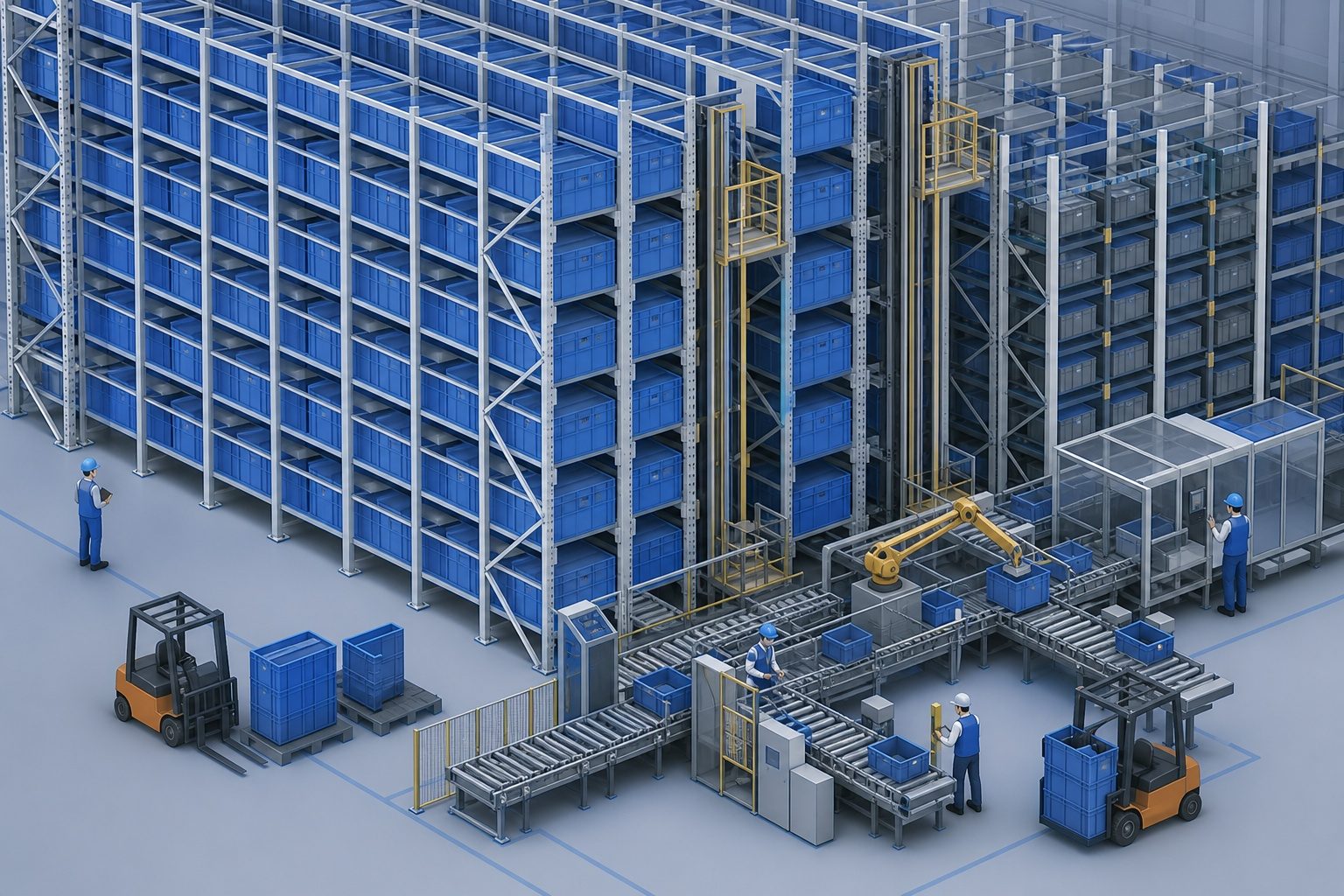
Phase 3: Equipment Manufacturing and Procurement
With the design approved, hardware production and component sourcing begin. This phase includes:
- Racking and structural components: Fabricated to the approved layout specifications
- Shuttle and lift systems: Assembled and bench-tested before shipping
- Conveyor and transfer modules: Configured for the specified tote dimensions and weight range
- Standard vs. custom items: Standard products (such as fixed-dimension totes and modular racking) typically have shorter lead times, while custom-fabricated components require additional production scheduling
Clients are usually provided with a manufacturing timeline and milestone updates. It is important to note that changes requested after design sign-off will impact both cost and delivery schedule.
Phase 4: On-Site Installation and Commissioning
Installation is conducted in a structured sequence to minimize disruption to ongoing warehouse operations where possible.
Typical installation steps include:
- Structural assembly: Racking installation, floor anchoring, and alignment verification
- Equipment mounting: Shuttle systems, vertical lifts, and conveyor segments installed and mechanically connected
- Electrical and network wiring: Power distribution, sensor cabling, and network connectivity for all automated nodes
- Individual equipment testing: Each subsystem (shuttles, lifts, conveyors, scanners) tested independently before integration
- System-level commissioning: End-to-end testing of storage, retrieval, and transfer sequences under controlled conditions
Safety systems—including emergency stops, protective fencing, light curtains, and fire suppression clearances—are verified during this phase. Commissioning documentation is provided to the client upon completion.
Phase 5: Software Integration and Interface Validation
Parallel to or following mechanical commissioning, the software integration phase ensures that the automated storage system communicates correctly with the client's existing information systems.
Interface validation covers:
- Inventory ledger synchronization: Confirming that stock records in the WMS match physical bin locations
- Task flow testing: Inbound putaway, outbound retrieval, cycle counting, and batch/expiration tracking workflows
- ERP/MES handoff: Order release, confirmation feedback, and exception alert routing
- User permission and access control: Role-based access for operators, supervisors, and administrators
This phase requires active participation from the client's IT team. Delays in providing test environments or API credentials are a frequent source of project timeline extension.
Phase 6: On-Site Training and Handover
Before the system goes live, operator and maintenance training is conducted on-site.
Training typically covers:
- Daily operations: Normal inbound, outbound, and inventory check procedures
- Exception handling: How to respond to common faults such as bin misalignment, scanner failures, or shuttle jams
- Safety protocols: Emergency stop procedures, lockout/tagout practices, and restricted zone awareness
- Basic maintenance: Routine inspection checklists, lubrication schedules, and component replacement indicators
Training is documented, and attendance records are maintained. A formal handover package—including operation manuals, maintenance schedules, warranty terms, and service contact information—is provided to the client.
Boundaries and Limitations to Be Aware Of
While the delivery process is designed to be comprehensive, certain items fall outside the standard project scope unless explicitly agreed upon:
- Building modifications: Structural reinforcement, HVAC upgrades, or fire suppression system changes are typically the client's responsibility
- Regulatory compliance: Industry-specific certifications (e.g., pharmaceutical GMP validation) require separate project scoping and cannot be assumed under a general automation contract
- Legacy data migration: Cleaning and migrating historical inventory data from older systems is usually handled by the client's IT team with guidance from the vendor
- Environmental controls: Temperature, humidity, and cleanroom requirements must be confirmed during the design phase and may require specialized equipment not included in standard configurations
---
Next Steps for Implementation Teams
If your organization is evaluating an automated storage deployment, the most effective first step is to compile the pre-sales data outlined in Phase 1. Having accurate SKU profiles, throughput targets, and facility dimensions ready will significantly accelerate the solution design process.
For a detailed discussion of how the tote-based mini ASRS delivery process applies to your specific operation, contact the Guang Er Mei project team to schedule a site assessment and requirements review.
Recommended
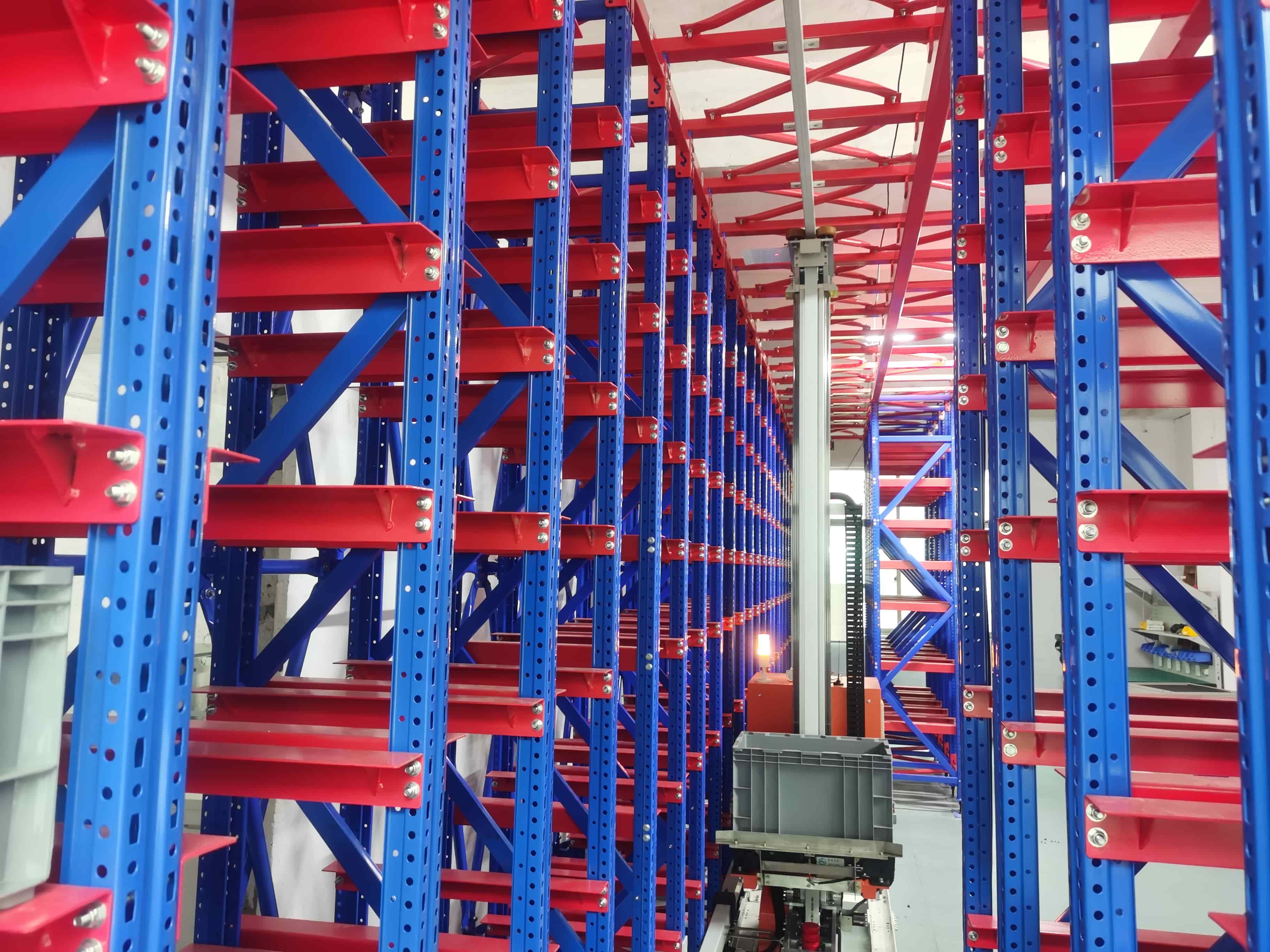
Miniload Stacker Crane AS/RS Solution
Using totes as the core storage and retrieval unit, combined with high-speed stacker cra...
- Previous: No more content
- Next: No more content