
E-Commerce Warehousing: Transitioning from Person-to-Goods to Goods-to-Person with Tote AS/RS
When Goods-to-Person Makes Sense for E-Commerce Fulfillment
The transition from traditional person-to-goods picking to automated goods-to-person (G2P) workflows is not a universal upgrade; it is a specific operational response to high SKU counts, frequent piece picking, and space constraints. For e-commerce warehouses handling small parts or multi-SKU orders, tote-based mini Automated Storage and Retrieval Systems (AS/RS) offer a structured path to reduce walking time and improve inventory accuracy. However, this shift requires validating that your cargo dimensions, throughput cycles, and site conditions align with standardized automation parameters before committing to a project.
Guangermei’s tote-based mini AS/RS solutions are designed specifically for this transition, focusing on standard tote units rather than pallets or irregular cartons. This article outlines the practical checkpoints for e-commerce operators considering this change, based on verifiable equipment capabilities and implementation realities.
Core Differences: Person-to-Goods vs. Goods-to-Person
Understanding the functional boundary between these two models prevents misapplication of automation technology.
Person-to-Goods Limitations in Scaling
In traditional e-commerce picking, operators travel to static shelving to retrieve items. As order volume grows, travel time consumes a significant portion of labor hours. Adding more pickers increases congestion and error rates without linearly improving throughput. Space utilization remains low because aisles must accommodate human movement and safety clearance.
Goods-to-Person Operational Shift
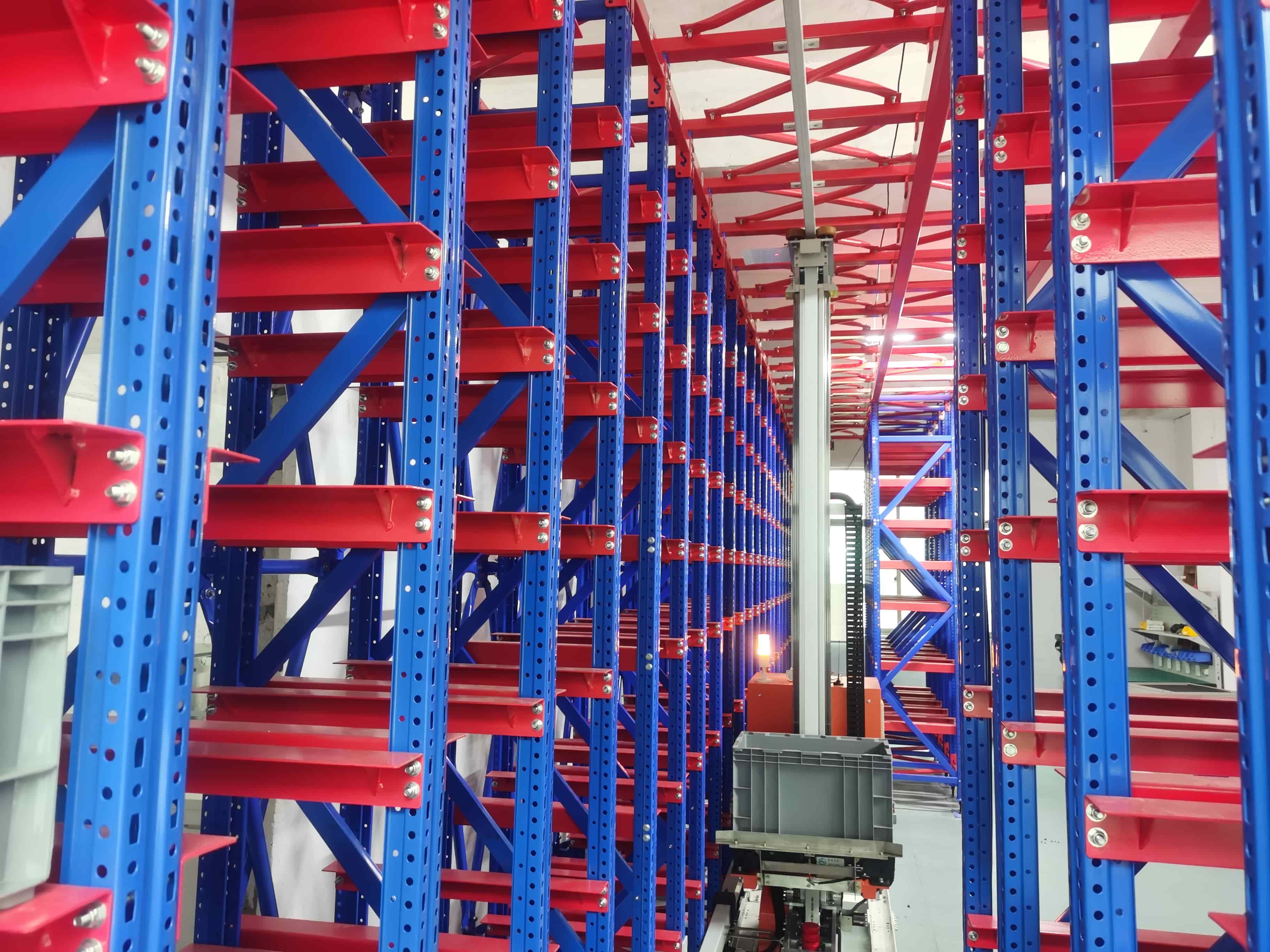
G2P systems bring inventory totes directly to stationary workstations via stacker cranes and conveyors. The operator remains at an ergonomic station, performing only picking and packing tasks. Key operational changes include:
- Storage Density:*
- High-bay racking utilizes vertical space up to 3150mm (standard reference height), significantly increasing storage locations per square meter compared to manual shelving.
- Retrieval Logic:*
- Inventory management shifts from location-based memory to system-directed retrieval, enabling batch picking and real-time stock validation.
- Labor Profile:*
- Staff transition from walkers to station operators, reducing physical fatigue and dependency on individual product knowledge.
Implementation Checkpoints for Tote-Based Mini AS/RS
Deploying G2P automation requires verifying specific technical and operational prerequisites. Use this step-by-step framework to assess readiness.
Step 1: Validate Cargo and Tote Compatibility
Tote-based AS/RS relies on standardized containers as the primary handling unit. Before designing a system, confirm your inventory fits within verified parameters:
- Standard Tote Dimensions:*
- Reference specifications are 550mm × 365mm × 210mm or 550mm × 365mm × 330mm. Non-standard sizes require project-specific verification.
- Weight Capacity:*
- Single tote load reference is ≤50 kg. Exceeding this limit affects stacker crane performance and safety margins.
- Container Integrity:*
- Existing totes must pass bottom strength and full-load deformation checks. Weak or warped containers cause jams and retrieval failures.
- SKU Suitability:*
- Ideal candidates are small parts, electronics, pharmaceuticals, or e-commerce items that fit securely in standard totes without overhang.
Note: If your current inventory uses irregular cartons or oversized items, a tote-based system may require repacking operations or alternative automation. Confirm adaptability during the demand analysis phase.
Step 2: Assess Throughput and Storage Requirements
Automation investment must match actual cycle times, not peak theoretical capacity.
- Storage Location Reference:*
- A standard module (approx. 12300mm × 2070mm × 3150mm) provides approx. 320 locations for 210mm totes or approx. 240 locations for 330mm totes. Calculate total required locations based on active SKUs and safety stock, not just current volume.
- Inbound/Outbound Cycles:*
- Define average and peak hourly retrieval rates. Stacker crane speed and conveyor configuration must be matched to these cycles. Over-specifying leads to unnecessary cost; under-specifying creates bottlenecks.
- Workstation Integration:*
- G2P efficiency depends on seamless workstation design. Plan for scanning validation, exception handling, and ergonomic interface placement to avoid negating automation gains at the pick point.
Step 3: Evaluate Site and Infrastructure Boundaries
Physical constraints often determine feasibility more than software capabilities.
- Floor Loading and Clear Height:*
- Verify floor bearing capacity supports concentrated racking loads. Ensure clear ceiling height accommodates the 3150mm standard equipment height plus maintenance clearance.
- Aisle Width and Maintenance Access:*
- Standard aisle width is optimized for stacker crane operation. Confirm no structural columns, HVAC ducts, or fire suppression systems intrude into the operating envelope.
- Power and Network Stability:*
- Automated systems require stable power supply and low-latency network connectivity for WCS/WMS integration. Unstable infrastructure causes downtime that exceeds manual operation inefficiencies.
Step 4: Define System Interfaces and Process Handoffs
Automation does not operate in isolation. Clarify responsibility boundaries early:
- WMS/WCS Integration:*
- Determine which system manages inventory records versus equipment control. Guangermei provides interface confirmation checklists covering inbound tasks, outbound tasks, stocktaking, and batch/expiry tracking.
- Exception Handling Protocol:*
- Define procedures for damaged totes, misreads, or system errors. Automated systems cannot self-correct physical anomalies without defined human intervention points.
- Training and Changeover:*
- Budget time for operator training on new workflows. Transition periods typically see temporary productivity dips; plan phased rollouts to mitigate risk.
Boundaries and Risk Considerations
Goods-to-person automation delivers measurable benefits but has clear limitations:
- Not for Irregular Cargo:*
- Items that cannot be stably stored in standard totes are poor candidates. Repacking costs may outweigh automation benefits.
- Fixed Flexibility Range:*
- While customizable, tote AS/RS is optimized for specific dimension ranges. Radical SKU profile changes post-installation may require hardware modification.
- Maintenance Dependency:*
- Unlike manual shelving, automated systems require preventive maintenance. Factor in service access, spare parts availability, and technician training when calculating total cost of ownership.
- Food/Chemical Adaptation:*
- Specialized environments (e.g., food, daily chemicals) require additional compatibility verification for materials, cleaning protocols, and regulatory compliance before deployment.
Next Steps for E-Commerce Teams
If your warehouse exhibits high SKU diversity, frequent piece picking, and space pressure, tote-based mini AS/RS warrants serious evaluation. Proceed with these actionable steps:
- Audit Current Totes: Measure dimensions, weight, and condition against standard references (550×365×210/330mm, ≤50kg). Document exceptions.
- Map Cycle Data: Record hourly inbound/outbound volumes to establish baseline throughput requirements.
- Conduct Site Survey: Verify floor loading, clear height, and utility stability against equipment specifications.
- Request Feasibility Assessment: Engage Guangermei for a demand analysis and solution design based on your verified data. Our team provides standardized product options or project customization aligned with real business needs—not generic proposals.
For e-commerce operators ready to move beyond person-to-goods limitations, the path forward starts with precise validation, not assumptions. Contact Guangermei to discuss your specific tote-based automation requirements and schedule a technical consultation.
Recommended
Miniload Stacker Crane AS/RS Solution
Using totes as the core storage and retrieval unit, combined with high-speed stacker cra...